Traditional Homemade Recipes Passed Down for Generations
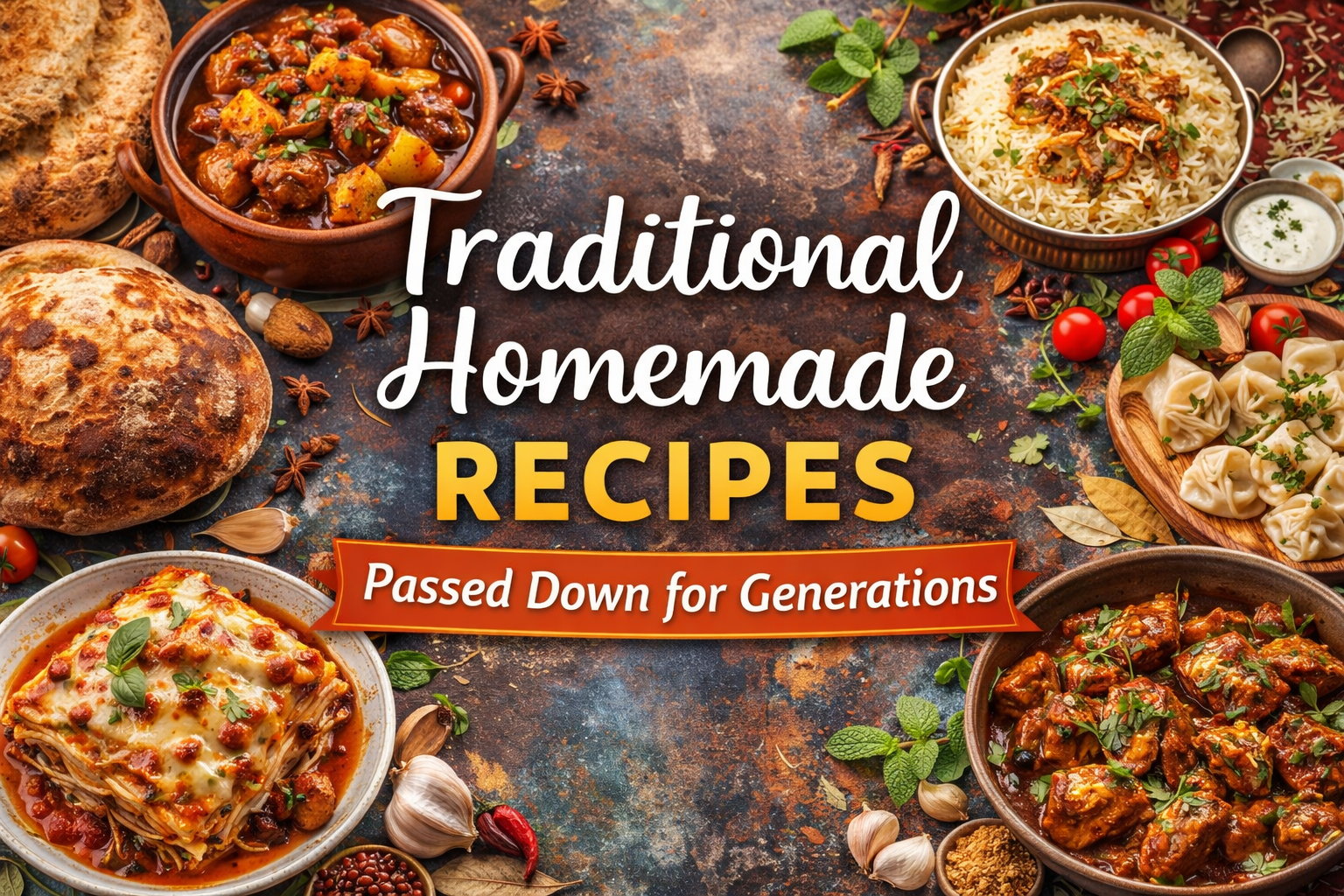
Traditional Homemade Recipes Passed Down for Generations Traditional homemade recipes are more than just food—they are a living connection to history, culture, and family heritage. Passed down from generation to generation, these recipes carry stories, values, and emotions that modern fast food can never replace. In a world driven by convenience, traditional home cooking reminds us of the importance of patience, authenticity, and togetherness. Traditional Homemade Recipes Passed Down for Generations. Traditional Homemade Recipes Passed Down for Generations
This article explores the beauty, significance, and timeless appeal of traditional homemade recipes, why they still matter today, and how they continue to shape family traditions across the world.
The Meaning of Traditional Homemade Recipes
Traditional Homemade Recipes Passed Down for Generations Traditional homemade recipes are dishes that have been prepared in families for decades—sometimes even centuries. These recipes are often taught orally, learned by watching elders cook in the kitchen, and perfected through experience rather than written measurements.
A Legacy on a Plate
Every traditional recipe tells a story:
-
Of grandparents cooking over slow flames
-
Of local ingredients and seasonal flavors
These dishes represent identity, belonging, and cultural pride.
Why Traditional Recipes Are Still Important Today
Traditional Homemade Recipes Passed Down for Generations Despite modern cooking shortcuts and ready-made meals, traditional recipes remain deeply relevant.
Preserving Cultural Heritage
Traditional recipes help preserve:
-
Regional cuisines
-
Indigenous ingredients
When these recipes are passed down, culture stays alive. Traditional Homemade Recipes Passed Down for Generations
Strengthening Family Bonds
Cooking together:
-
Encourages family interaction
Many people remember learning recipes from parents or grandparents during childhood, making food an emotional experience.
Common Characteristics of Traditional Homemade Recipes
Traditional recipes share certain qualities that make them timeless.
Simple, Natural Ingredients
Most traditional dishes rely on:
-
Fresh vegetables
-
Whole grains
-
Natural spices
-
Locally sourced ingredients
They avoid preservatives and artificial flavors, making them healthier.
Slow Cooking Methods
Unlike fast food, traditional recipes often use:
-
Slow simmering
-
Hand grinding spices
-
Long marination times
These methods enhance flavor and nutrition.
Passed Through Practice, Not Books
-
Measured “by hand”
-
Adjusted by taste
-
Learned through observation
This makes every family’s version slightly unique.
Traditional Recipes Around the World
Every culture has its own treasure of homemade recipes.
Asian Traditional Cooking
Asian cuisines emphasize balance and technique:
-
Slow-cooked curries
-
Hand-rolled dumplings
-
Fermented foods
These recipes are often tied to festivals and rituals.
Middle Eastern Family Recipes
Middle Eastern cooking highlights:
-
Generous use of spices
-
Slow-roasted meats
-
Shared family meals
Recipes are commonly passed from mothers to daughters.
European Heritage Recipes
European traditional food focuses on:
-
Bread-making traditions
-
Soups and stews
-
Seasonal preservation
Many recipes date back hundreds of years. Traditional Homemade Recipes Passed Down for Generations
Traditional Homemade Recipes vs Modern Cooking
Taste and Quality
Traditional recipes:
-
Have deeper, richer flavors
-
Use natural techniques
-
Focus on quality over speed
Modern recipes often prioritize convenience.
Health Benefits
Traditional home cooking:
-
Contains fewer processed ingredients
-
Uses healthier fats
-
Includes balanced nutrition
This makes them better for long-term health.
How Traditional Recipes Are Passed Down
Oral Tradition
Many families do not write recipes down. Instead:
-
Elders demonstrate cooking
-
Children learn by helping
-
Adjustments are memorized
Special Occasions
Festivals and celebrations are key moments when traditional recipes are taught, ensuring they remain alive in family culture.
Challenges Facing Traditional Homemade Recipes
Busy Modern Lifestyles
Lack of time has reduced home cooking:
-
Long recipes feel difficult
-
Fast food seems easier
Loss of Interest in Younger Generations
Younger people may:
-
Prefer quick meals
-
Lack patience for slow cooking
This threatens the survival of traditional dishes.
How to Preserve Traditional Recipes Today
Writing Recipes Down
Documenting family recipes:
-
Prevents loss
-
Allows sharing with future generations
Teaching Children Early
Involving children in cooking:
-
Builds interest
-
Encourages appreciation
Adapting Without Losing Authenticity
Traditional recipes can be:
-
Slightly modernized
-
Made healthier
-
Adjusted for availability
Without losing their original essence.
Emotional Value of Traditional Homemade Food
Traditional recipes often bring:
-
Comfort during difficult times
-
Joy during celebrations
-
A sense of home
For many people, one bite of a traditional dish can bring back childhood memories.
Why Traditional Recipes Are Making a Comeback
In recent years, there has been a renewed interest in:
-
Home cooking
-
Organic ingredients
-
Cultural authenticity
People are realizing the value of slowing down and reconnecting with their roots.
Traditional Homemade Recipes in the Digital Age
Social media and food blogs have helped:
-
Share family recipes globally
-
Preserve cultural food knowledge
-
Inspire home cooks worldwide
What was once limited to family kitchens is now celebrated online.
Final Thoughts
Traditional homemade recipes passed down for generations are priceless treasures. They connect us to our ancestors, preserve cultural identity, and bring families together around the dining table. In an age of instant meals and fast lifestyles, these recipes remind us that the best food is made with time, love, and tradition.
By learning, preserving, and sharing traditional recipes, we ensure that future generations will continue to enjoy the flavors—and the stories—of the past.